
What Is Eating My Bougainvillea Leaves? Get Answers Here!
Are you seeing damage on your bougainvillea leaves? Like something’s been chomping and munching away? I’m not talking about a few little nibbles here and there, but some serious feasting. I’ll show you what might be causing the damage so you can identify the pest and take action.
I’ve had two bougainvilleas in my Santa Barbara garden (California) and now have four here in Tucson (Arizona). I’ve learned a lot about them from working at a nursery in Berkeley, but mostly through hands-on experience. They’re relatively easy to maintain, except for the pruning, which I happen to enjoy (yes, it’s true!). And you can’t beat them for an all-out show of color.
There are a few pests that attack bougainvilleas that I’ve briefly covered in previous posts and videos, so it’s time to take a closer look at the most common culprits.
Three Possible Bougainvillea Pests
Leaf Cutter Bee
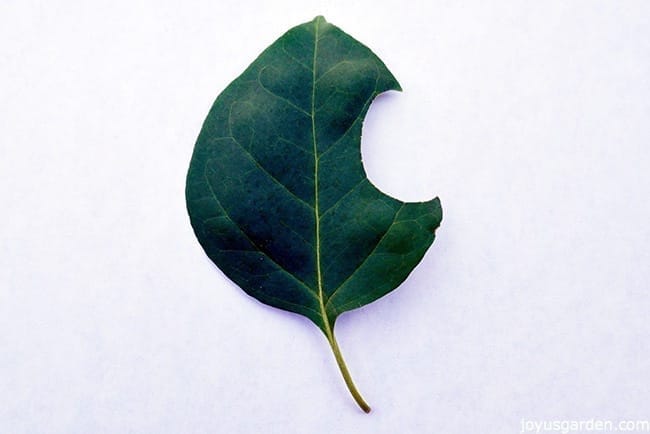
This one is very easy to identify because you’ll see large, even chomps (like half-moons) taken out of the sides of the leaves. You rarely see the leaf cutter bee itself because it quickly chews out a piece of leaf and flies away. You may also see them referred to as the leaf cutting bee or leafcutter bee.
I never saw leaf cutter bees in Santa Barbara, but I did notice them on one of my bougainvilleas here in Tucson in the spring. The damage wasn’t extensive, but it was enough for me to notice. It’s now the very end of August, and lo and behold, I found another leaf with the telltale evidence so I could show you.
When to keep your eye out for leaf cutter bees: spring.
What you should do: NOTHING. Leaf cutter bees are beneficial pollinators, and we need them. The bougainvillea leaves will grow back as they’re always putting out new foliage. The bees focused on gathering pieces of foliage to build their nests, so there’s no need to worry about them.
They can’t be bothered with us humans, so you don’t have to worry about being stung!
2 Types Of Caterpillars
The pests below are caterpillars, which means they eat like crazy. There are many different types of caterpillars, and they’re all hungry critters. The damage caused by these bougainvillea caterpillars can vary somewhat, but the treatment is generally the same.
All caterpillars, not just these two, eat and poop like crazy, so the little black specks you’ll see on the leaves are their frass. And yes, insect excrement has its own word! Here’s a heads-up: those black droppings are often a sure sign that caterpillars are in the house.
When to keep your eye out for caterpillars: summer.
These are the two caterpillars I’ve seen on my bougainvilleas and have experience dealing with:
Leaftier Caterpillar
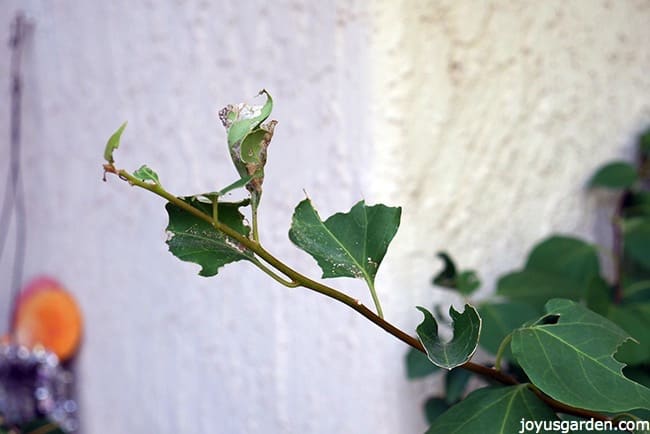
I didn’t see these on my bougainvilleas in Santa Barbara, although they can be found there. I’ve only dealt with them here in Tucson. They protect themselves by hiding inside the leaves, rolling them up, and securing them with silky threads.
After the caterpillars are gone, you can unroll a leaf and still see evidence of those threads on the undersides. From what I’ve observed, the damage is usually concentrated at the ends of the stems where the new growth is.
Bougainvillea Looper
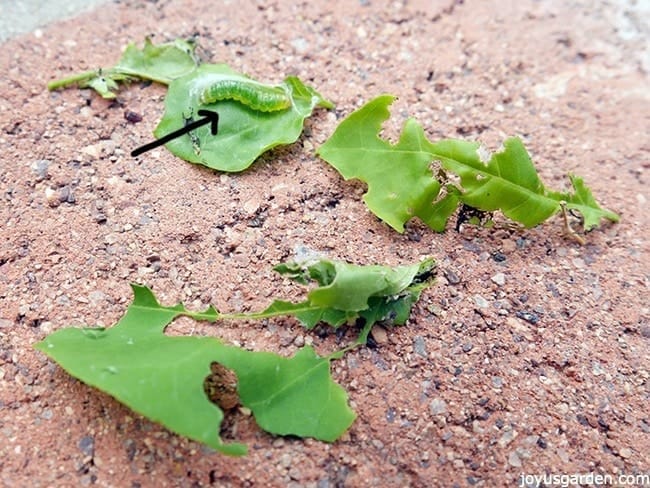
These are the most common chewing pests that attack bougainvilleas, at least in my experience. My Bougainvillea glabra in Santa Barbara had loopers every year, big time, by late July. They’re inchworms and can be brown, green, or yellow, depending on their age. They’re also hard to spot because they hang out under the leaves and feed mostly at night.
From what I’ve seen, these tiny creatures do much more damage than leaftier caterpillars. They chew extensively on both old and new leaves, which can eventually look like delicate lace or disappear altogether. I’ve never seen bougainvillea loopers cause leaf curl.
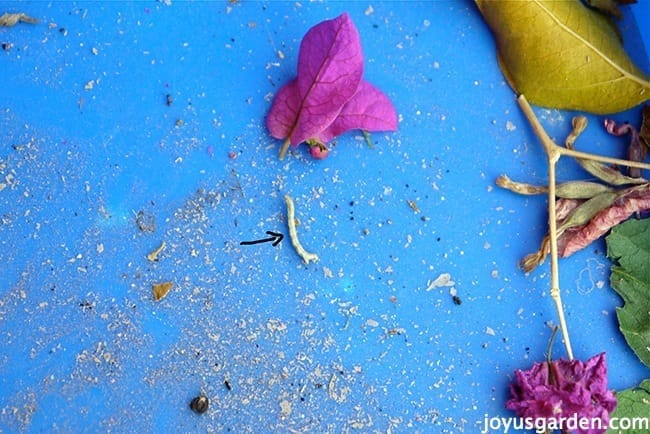
Treatment For These Caterpillars on Your Bougainvillea Leaves
These pests don’t harm or endanger the health of an established plant. The damage is cosmetic. Bougainvilleas shed and regrow their foliage a couple of times a year, so new leaves will eventually replace the damaged ones. From what I’ve seen, the older leaves aren’t affected as much. That fresh new growth is nice and tender, making it especially appealing to hungry caterpillars!
On the other hand, a young plant could be more susceptible to a bad infestation, but should still recover. Bougainvillea pests remain host-specific and won’t spread to other plants in your garden,
Here are your three options for treating these bougainvillea pests:
1.) Do Nothing
My bougainvilleas are well established, and the damage doesn’t bother me, regardless of which caterpillar is responsible. The caterpillars eventually hatch into moths, fly away, and then I typically won’t see them again until the following year.
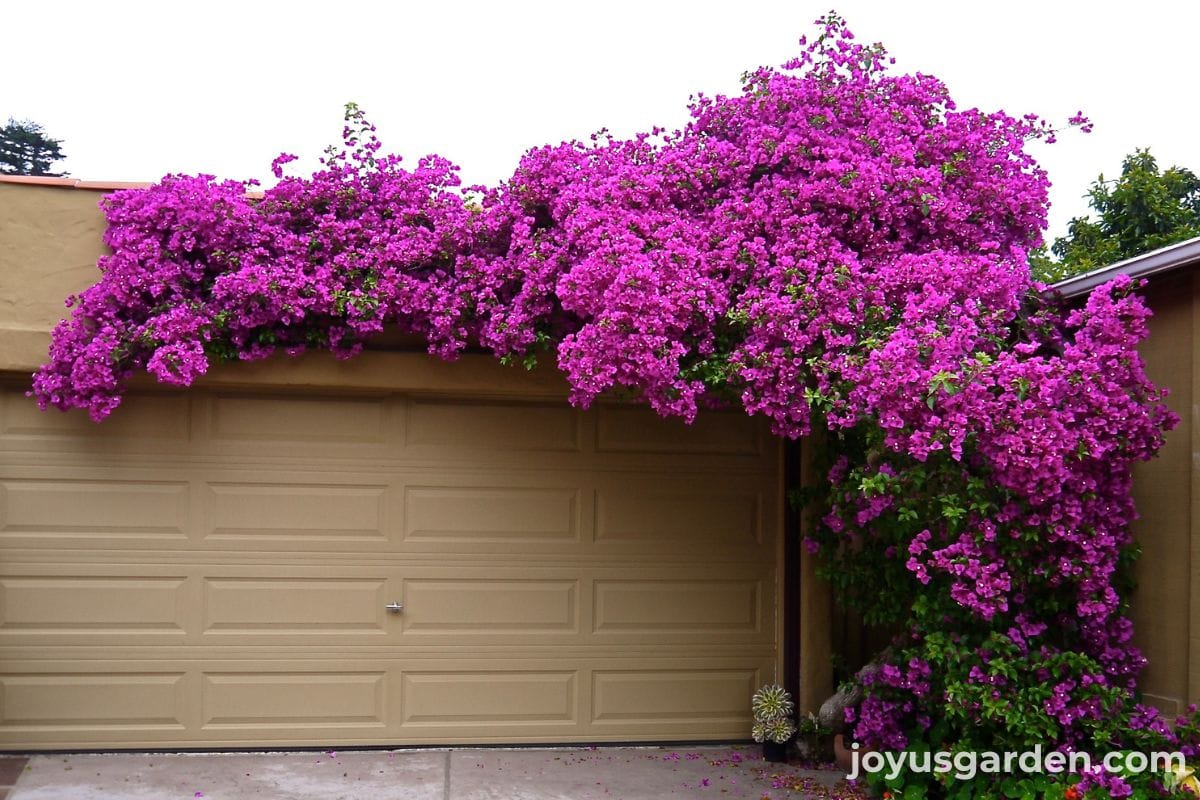
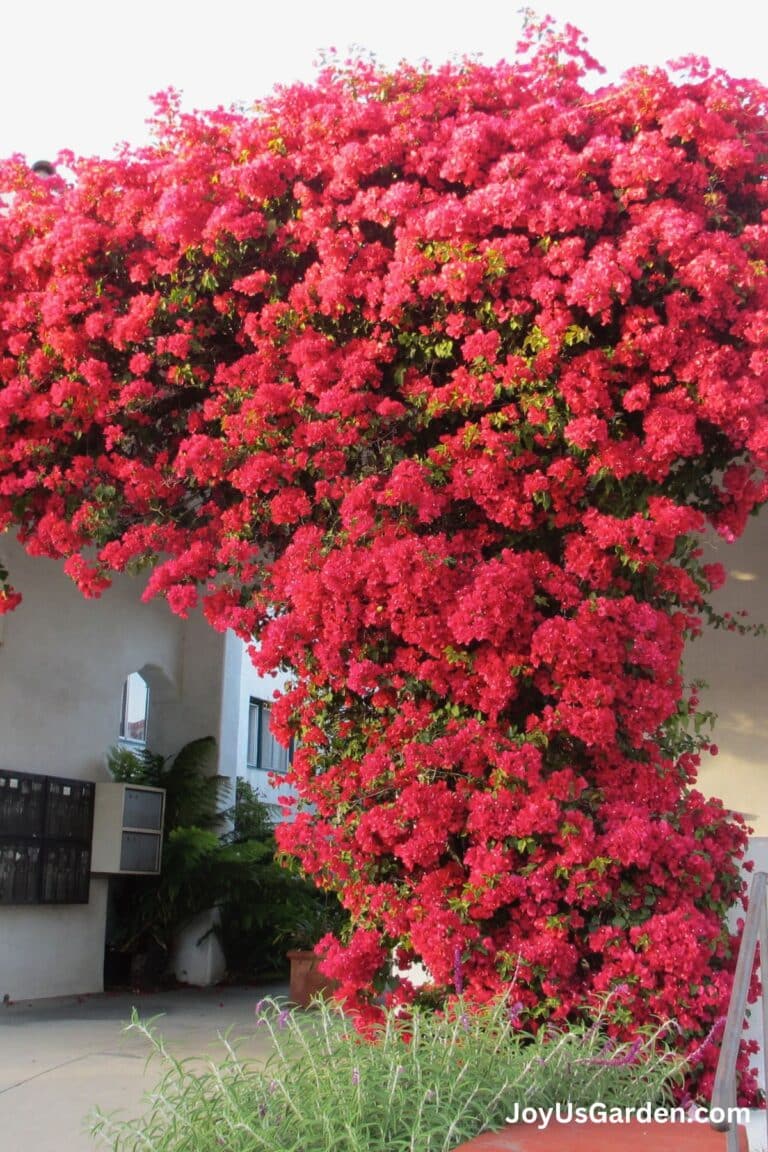
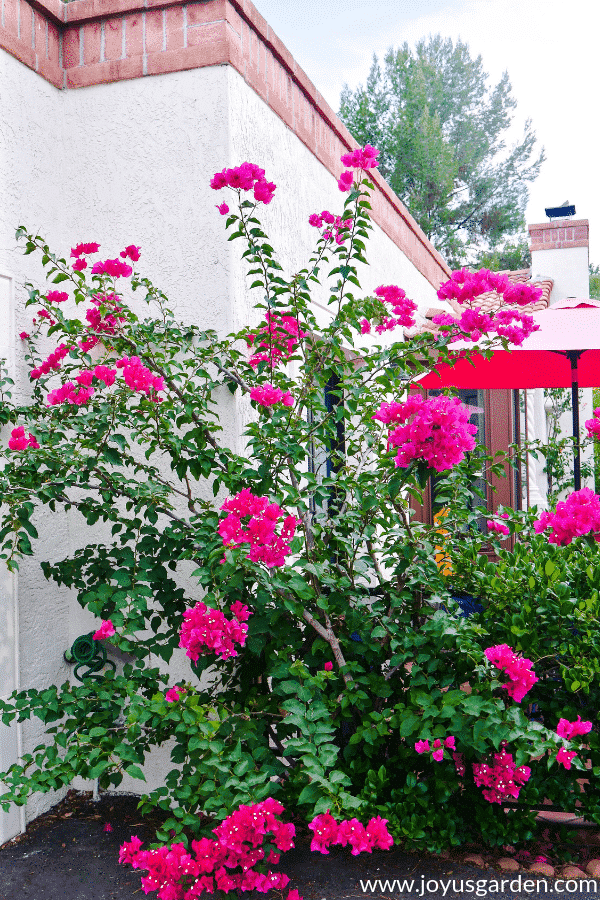
That being said, I eventually pruned off the unattractive leaves damaged by the leaftier caterpillars. As for the loopers, I let them be. My Bougainvillea glabra in Santa Barbara was so full and dense (you can see it in the lead photo) that the damage was hardly noticeable unless I looked closely.
2.) Remove Them by Hand
This method is labor-intensive, but it can be done over time. It’s much easier to manage leaftier caterpillars because you can usually find them tucked inside the rolled-up leaves during the day, protected by their silky covering.
Bougainvillea loopers are much harder to spot because they hide under the leaves and do most of their feeding at night. Hand-picking them is certainly possible, but it can be a tedious task!
3.) Spray the Leaves
BT (Bacillus thuringiensis) is a naturally occurring bacteria that makes caterpillars, including bougainvillea loopers, sick and ultimately causes them to die. It’s considered a natural pesticide. When I worked at a nursery, this was the product we always recommended for controlling caterpillars.
Another option is neem oil. It’s reported to help control caterpillars, although I don’t have any firsthand experience using it for this purpose.
If you choose to use a spray, my advice is to start early before the infestation becomes severe. Reapply as directed if the caterpillars return. Be sure to spray where the caterpillars are feeding for the treatment to be effective. Even though these products are generally considered safer for beneficial insects, it’s best to spray around dusk when pollinators and other beneficial insects are less active.
A heads-up: Caterpillars require different treatment from many common garden pests. Insecticidal soap and horticultural oil won’t be effective, so don’t waste your time or money on them.
Useful Bougainvillea Resources
Bougainvillea Winter Care Tips
Answering Your Questions About Bougainvillea
Good to Know
I’ve noticed that these pests don’t seem to attack the flowers or colorful bracts, and that’s a very good thing. We want that explosion of color that bougainvilleas are known for!
I’ve also never seen these pests spread to other plants in my garden. Whether you choose to treat them or not, I encourage you to do a little additional research to determine what’s best for you, your plant, and the environment.
To help you tell them apart:
- Leaf cutter bees = distinctive half-moon cuts in the leaves, but they’re harmless and beneficial.
- Leaftier caterpillars = rolled leaves held together with silky threads.
- Bougainvillea loopers = the real foliage-munching champions!
Bougainvillea Leaves FAQs
Will bougainvillea pests spread to my vegetables or other plants?
No. Bougainvillea loopers and leaftier caterpillars are considered host-specific pests that feed on bougainvillea foliage. In my experience, I’ve never seen them spread to vegetables, herbs, or other ornamental plants growing nearby.
Leaf cutter bees are a different story. They may cut pieces from the leaves of many different plants to build their nests, but they cause only minor cosmetic damage and are valuable pollinators. Leave them be, they’ll eventually fly off and be on their way.
How long does it take for damaged bougainvillea leaves to recover?
Bougainvilleas naturally shed and regrow their foliage throughout the year. I know because I’ve raked and swept up plenty of bougainvillea leaves over the years!
Damaged leaves won’t repair themselves. Over time, they’ll eventually drop, and healthy new growth will replace them. From what I’ve observed, established bougainvilleas recover well from this type of cosmetic damage and continue growing and blooming as usual.
Exact timing varies depending on the season, climate, and growing conditions, but once fresh new growth appears, the plant starts to look better quickly.
Will these bougainvillea pests attack the blooms?
No. In my experience, all three pests discussed here target only the foliage. They don’t feed on or damage the colorful bracts (the modified leaves that give bougainvillea its color) or the true flowers, which are the white centers.
Your color display will still shine through even during an active infestation, which is why many gardeners choose not to treat established plants unless the damage becomes severe.
Is there a way to prevent these pests from appearing?
Leaf cutter bees, leaftier caterpillars, and bougainvillea loopers are native insects with specific seasonal cycles, making complete prevention unrealistic. They tend to come and go seasonally.
If you had heavy damage the previous season, you can try applying a preventative BT spray a couple of weeks before peak activity. Keeping your bougainvillea healthy with proper watering and pruning also helps the plant better tolerate any damage.
Should I remove leaves that have been chewed or damaged?
If you’d like. I leave the lightly damaged leaves on the plant and prune off the heavily damaged, unsightly leaves after the pests have flown on their merry way. Damaged leaves won’t miraculously repair themselves, but new healthy growth will replace them.
How can I inspect my bougainvillea for pests more effectively?
Check both sides of the leaves and inspect new growth early in the morning or after sunset, when most pests are active.
I see webbing on my bougainvillea. Is it spider mites?
Check for frass first. Those tiny black specks are caterpillar droppings, so webbing plus black specks almost always means the leaftier caterpillar rolling up the leaves. Spider mite webbing is finer, shows up on the undersides of the leaves and where they meet the stems, and comes with pale speckling on the leaf tops instead of chewing. Hold a sheet of white paper under a branch and give it a tap, and if you see tiny dots moving around, you have mites.
Could sunburn or wind damage be mistaken for insect damage on bougainvillea leaves?
Yes. In hot, sunny, or windy climates, leaves can become torn, scorched, or ragged-looking, which is sometimes mistaken for pest damage.
Why is my bougainvillea losing leaves? I don’t see any insects.
I threw this one in just for fun! Bougainvillea leaf drop can be caused by water stress (overwatering or underwatering), transplant shock, temperature changes, or seasonal stress rather than pests. Also, bougainvilleas naturally shed leaves a couple of times a year. I know, I raked and swept up many a bougie leaf!
Video Guide
Conclusion: If you’ve been wondering, What is eating my bougainvillea leaves?, identifying the culprit is the first step toward solving the problem. Whether you’re seeing holes in bougainvillea leaves, chewed edges, rolled up leaves, webbing, or other visible damage, a close inspection can often reveal the pest responsible.
While leaf cutter bees, leaftier caterpillars, and bougainvillea loopers can all leave their mark on the leaves of bougainvillea plants, established plants bounce back just fine. Keep an eye out for damage and take action if needed. Let the blooms continue!
Check Out Our Tutorial: Mastering Bougainvillea
Happy gardening,

- About the Author
- Latest Posts

Nell, the founder of Joy Us garden, was born into a gardening family and grew up in Connecticut’s countryside. After living in Boston, New York, San Francisco, & Santa Barbara, she now calls the Arizona desert home. She studied horticulture & garden design, working in the field all her life. Nell is a gardener, designer, blogger, Youtube creator, & author. She’s been gardening for a very long time & wants to share what she’s learned with you.
Great info Nell
Joan from Santa Barbara
Thank you Joan! good to hear from you. Nell
Hello Neil
I’m so glad to have found your post I am in the Gold Canyon area and have a bougainvillea for years and this year is the first time I encounter this problem… lots of butterflies and or moths as well.
Thanks to your post now I know what I am dealing with.
Hi Lolis – Yes, lots of butterflies this year which I’m thoroughly enjoying. I just let my bougainvilleas be & the caterpillars have left. They’re looking much better now that the temps have dropped to the 90’s! Nell
Hi Nell,
thank you for finally showing the Bougainvillea Leaftier. I have video of the Bougainvillea Looper if that would help you. I sent images of the Leaftier (before know what it is) to the LA County Dept. of Agriculture and they couldn’t identify it and suggested it was a juvenile looper, which is definitely not true and has entirely different shape and locomotion. I have an image of the juvenile which is entirely clear/translucent, if that would help you.
Thank you, Nell,
John
Hi John – Sure, that would be great. My bougies in Santa Barbara always got the looper. You can send the image to: info@joyusgarden.com with “looper image for Nell” in the subject line. Thanks! Nell
Thank you for this info! I just noticed my new leaves coming out on my plants …they went bare for a few weeks…and I sprayed with a pesticide …3 and 1 Ortho… because I noticed black specks on leaves and some eaten away… I came out today and there are black poop specks everywhere on the ground on the pot and leaves. Is it OK to spray again? Obviously I have caterpillars I guess… I am on the 8th floor and I have two beautiful Bouganvilleas (Spelling…) in pots… I’ve never noticed this so bad before
.. I have all this new leafage and I am afraid they’re going to destroy my plants completely. Any additional help you can give me would be greatly appreciated thank you! Maybe a special kind of pesticide? This book and bouganvilleas usually Bloom so radiant Li
Hi – I don’t use chemical pesticides so can’t recommend any. Most chemical & “safe” sprays don’t work on caterpillars. As I say in the post, any BT spray works on them. They’re hard to control because most feed & are active after dark. If you spray, be sure to get the undersides of the leaves. Nell
Hi,
I live in Cape Town, South Africa. At the moment we are going through
a drought. I have a bougainvillea growing in a tub. It isn’t growing very
well and I couldn’t understand why. This afternoon I found the culprit.
There were 5 doves sitting round the tub eating the leaves. I have never
come across this before. Could it be the drought and everything is very
dry. There is water available for them.
Any comments,
Regards,
Jean Strachan
Hi Jean – I’ve heard about your drought. I have lots of doves around my house here in the Arizona desert & none of them eat my bougainvilleas. I do know that some birds will eat the caterpillars which feed on the leaves. Not sure if doves do. Nell
Something is killing my huge bougainvilleas by destroying the woody stems, Not any wildlife like deer here in san diego city, There are various birds rousing in the vines like sparrow finch and doves, I have never seen the birds pecking the vines and no leaf damage, Have wondered it possibly insects in or on the stems that cause birds to peck them? or would birds be shredding the vines for any other reason? Is there some insect that attacks the woody stems? The damage is on going for years and extensive. There is much debris, shredded parts of stems Now the same damage is happening to the top fronds on a huge date palm i planted from seed 25 yrs ago, eating out the central channel of the leaves, It is destroying top of the tree and i fear will kill the tree if it tops it off by killing new fronds. I have never seen any insects on either plant no beetles or caterpillars evident or leaf damage. Help? direct me what to research please.
Hi Fortune – You could try your local ag extension office & seek their help as to what’s going on with your bougainvillea & date palm. http://cesandiego.ucanr.edu/ Nell
Hello Nell, I live in Playa del Carmen, (south of Cancun, Mexico). Of course, we have warm to very hot wheater, I have 2 Santa Rita plants, in large pots in the balcony, 4 flr…
One is doing fantastic, growing up from a small branch with roots I found when walking.Lucky me.
The other one we bought it from a nursery.. Its “flowers” are mixed and white color.. But… the green leaves are showing signs of a pest…
I found brown little circles plus some elongated holes, like if the circle has expanded…
Could you please advise what can I do to eliminate whatever is that is causing the damage.
I would very much appreciate your answer, on line or by e-mail.
Thank you,
Dora Sohnlein
Hi Dora – I’ve been to Playa del Carmen years ago. The pests I’m familiar with that attack bougies are in the post. The bougainvillea looper is the most common. There’s also a bougainvillea caterpillar moth but I’ve never seen it before. Grasshoppers can also attack bougainvilleas & voraciously devour leaves & flowers. I’d check at a reputable nursery & see if there’s another pest specifically to your area which could be attacking them. Nell
Hi, I have sent you a picture of my Bouganville’s infested leaves.. thank you…
Dora S.
I saw them Dora & answered your previous comment. Nell
I have the black specs, too, just like the person who posted. I ordered the BT for the caterpillars from you Amazon link- thank you so much.
You’re certainly welcome Katie. My bougainvilleas have them this year but not as bad as last year. They come hand in hand with the plant! Nell
Hi Nell, is BT a brand or just a generic ? Do you know a BT spray by name ? Can I find’t at Home Depot for example? Many thanks !!!!
Hi Victoria – BT is an ingredient (Bacillus thuringiensis) so they are different brands that contain it. It’s quite common so someone at HD will be able to help you find it. Nell
Hi Nell,
Great information. I have beautiful white bougainvilleas in my south Florida yard. I have been told, the white variety has a bigger issue with caterpillars than other colors. Is this something you have seen?
Thanks,
Thank you Roxane. I haven’t heard that about the white bougainvilleas. My Rainbow Gold Bougainvillea got good & chewed last season but came back beautifully. My Barbara Karst is much less attacked. Could be because it gets more hot sun. Nell
Live in Sun City AZ and my bush is 6 years old. Something is eating the branches. Looks like they have been cut. It only happens over night.
Lorraine – It’s most likely the leaf cutter bee. Nell
Hi Nell! I recently started outdoor gardening and have loved reading your posts. I read up on bougainvilleas before planting mine and followed your advice to keep it in the nursery pot. I think I have a rosenka (it wasn’t labeled). The blooms have all fallen off and the leaves are all curled. I noticed in the top photo on this post you have something that looks similar, same colors and curled leaves, though my leaves are more curled. I have no idea what I’m doing wrong or how to get my bougie looking healthier. The leaves are green and not dry, and I haven’t noticed any particular pests, though we have lots of spiders and they have made their ways into some of the leaf curls. I don’t see signs of a nutrient deficiency, but maybe I don’t know how to spot it. I’ve fed it orchid food 30-10-10 a couple of times in the past 6 weeks. Thank you for putting this wonderful and informative blog together!
Hi Carina – You’re very welcome! Often you don’t see a pest, only the effects. With a 30-10-10 fertilizer, the nitrogen is too high is ratio for a bougie. I’ve done lots of posts which you can check here: https://www.joyusgarden.com/category/outdoor-gardening/bougainvillea/ Nell
Hello Nell,
WOW! What a wonder blog. You have given me so much to work with. I am going to try the neem oil. I have the half moon eater. However, I live in South Florida and we also have iguana’s. They climb up anything.and eat anything with color. I put bird spikes so the can’t climb and moved it far away from the wall. Because it on has 5 shoots I can see everything. It was full with beautiful pink flowers. One day it was chewed to pieces.Flowers were on the ground. I cut all chewed leaves, put spikes, and came out next day and couple leaves not many. So I think I have iguana and caterpillars. I thank you for being there with the compilation of information. Your the best. Elaine
Have you heard of spider mites on bougainvilleas? I see a web in mine & am thinking spider mites, but I also see frass.
Hi Jennifer – The frass is your giveaway. Spider mites don’t leave droppings behind, so those black specks tell me you’ve got caterpillars. Webbing plus frass on a bougainvillea usually means the leaftier. They roll the leaves up and hold them shut with silky threads. Unroll one of those rolled leaves and you’ll most likely find the caterpillar sitting right inside.
If you still want to rule out mites, their webbing is fine and cobwebby and shows up on the undersides of the leaves and where the leaves meet the stems. You’d see tiny pale speckling on the tops of the leaves instead of chewing. Hold a sheet of white paper under a branch and give it a tap. Tiny moving dots means mites.
For the caterpillars, BT is what works. Insecticidal soap and horticultural oil won’t touch them. Nell